
E-Khata Explained — What Buyers Must Know in 2026
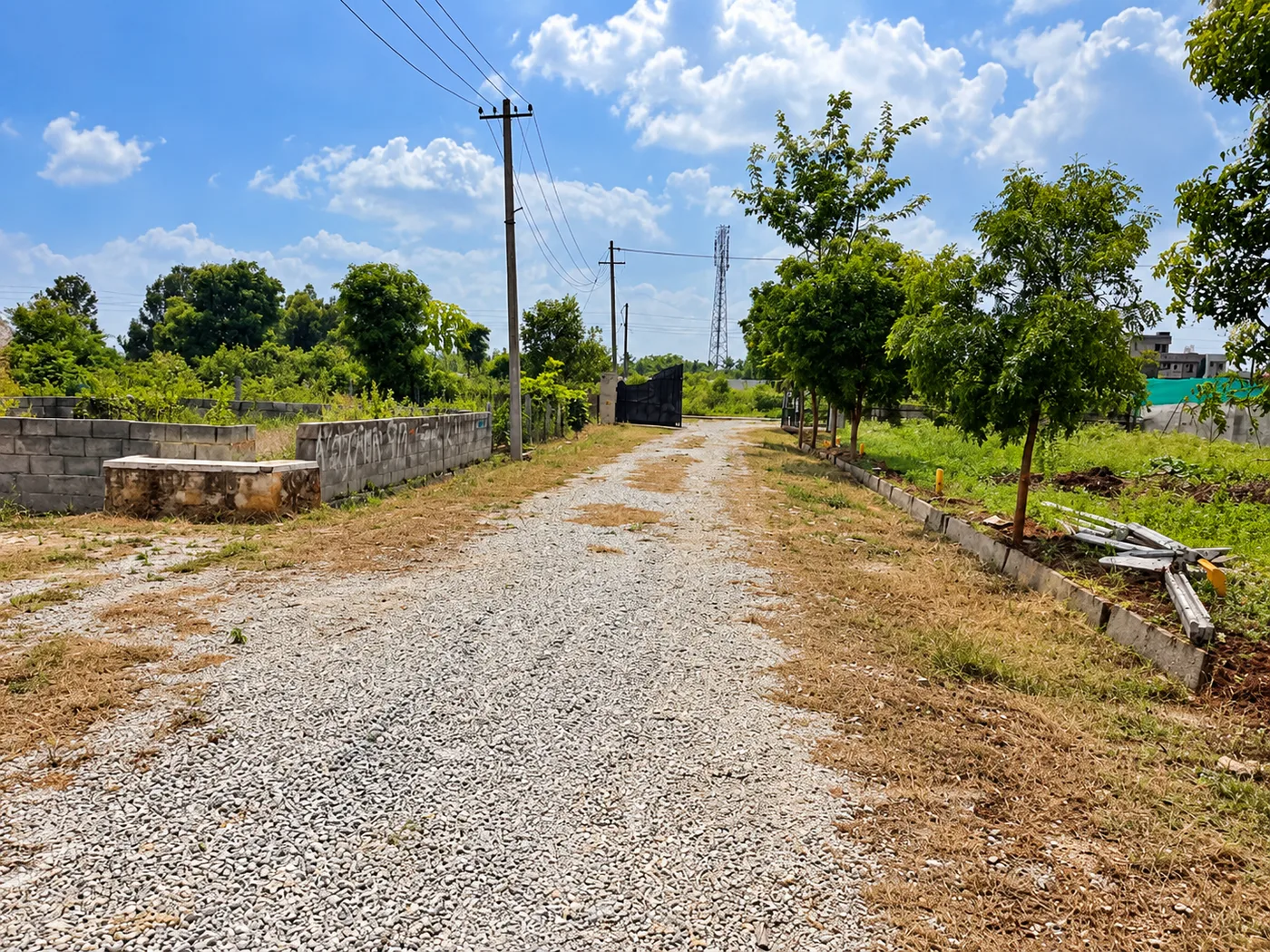
Demystifying E-Khata for Karnataka Property Buyers
Few terms in Karnataka real estate create more confusion among first-time homebuyers and plot investors than E-Khata. Many buyers ask: *Is an E-Khata the same as an A-Khata? Can I get a bank loan on an E-Khata plot? Why did the Sub-Registrar reject my paper khata even though it had official government rubber stamps?*
In 2026, understanding the precise e-khata meaning and how digital land governance operates in Karnataka is not just academic — it is the single most critical legal defense against property fraud, double-selling, and rejected sale deed registrations.
This in-depth legal guide breaks down everything buyers must know: what E-Khata actually is, how the digital portals (e-Swathu and e-Aasthi) function, how Form 9 and Form 11A operate, how E-Khata differs fundamentally from the classic A-Khata vs B-Khata classification, and how to verify authenticity before signing any land agreement.
What Does E-Khata Actually Mean? (E-Khata Meaning)
The word "Khata" translates from Kannada to an administrative "account" or revenue record. It documents who owns a property, its physical boundaries and measurements, its tax assessment classification, and who is legally liable to pay annual property taxes to the local governing body.
Historically, khatas were handwritten into physical paper registers kept at local Gram Panchayat offices, City Municipal Councils (CMC), or BBMP ward offices. This manual paper-based system suffered from catastrophic vulnerabilities: corrupt intermediaries forged rubber stamps, rogue revenue officers created duplicate paper certificates for the same parcel of farmland, and fraudulent sellers sold the same plot multiple times to unsuspecting buyers.
To permanently eradicate this menace, the Government of Karnataka developed E-Khata — a centralized, 100% digital electronic property database.
An E-Khata is an electronically generated property tax certificate that is: 1. Created and hosted exclusively on secure government servers. 2. Assigned a permanent, unique 18-digit Property Identification (PID) Number. 3. Embedded with a cryptographically signed digital signature and dynamic scannable QR code. 4. Linked directly with biometric identity records, GPS geo-coordinates, and physical property photographs.
When you hold a genuine E-Khata, the property exists unequivocally in the government's official digital land registry.
The Two Platforms: e-Swathu vs e-Aasthi
Depending on where your property is situated, its E-Khata is generated through one of two distinct state government platforms:
1. e-Swathu (Rural & Gram Panchayat Jurisdictions) Outside municipal municipal corporation limits — such as high-growth plotted corridors in Rajanukunte, Narasapura, Vemgal, Hoskote, and Nelamangala — properties fall under the jurisdiction of the Rural Development and Panchayat Raj (RDPR) Department. All electronic property certificates here are generated via the **e-Swathu** software platform (e-swathu.kar.nic.in).
2. e-Aasthi (Urban & Municipal Jurisdictions) Within urban local bodies, city municipal councils (CMC), and Bruhat Bengaluru Mahanagara Palike (BBMP) ward boundaries, digital property records are managed through the **e-Aasthi** portal.
Form 9 and Form 11A: The Core Components of an e-Swathu E-Khata
When purchasing residential land in emerging suburban corridors like Rajanukunte, your E-Khata will consist of two legally inseparable electronic documents generated on e-Swathu:
Form 9 (Panchayat Layout Clearance Certificate) Form 9 is issued by the Gram Panchayat certifying that the plot or parcel of land sits within a legally recognized Gramatana (village settlement) or forms part of a legally sanctioned residential layout that has secured statutory DC Conversion from the District Commissioner. It documents the exact survey number, approved layout drawing reference, road width, and boundary reservations.
Form 11A (Non-Agricultural Tax Assessment Extract) Form 11A is the electronic extract from the Gram Panchayat's non-agricultural land assessment register. It specifies the unique PID number, plot dimensions (e.g. 30×40 ft = 1,200 sq.ft), owner name, property tax assessment calculation, and payment clearance history.
Crucial Warning: Be cautious of properties carrying a Form 11B. Form 11B is issued for unapproved or revenue properties with building violations or missing conversion approvals — essentially the rural equivalent of a B-Khata. To ensure pristine legal security, your plot must carry an authentic Form 11A.
E-Khata vs A-Khata vs B-Khata: Understanding the Vital Distinction
One of the most widespread misconceptions in real estate is treating E-Khata and A-Khata as competing or mutually exclusive certificates. In reality, they describe two completely different dimensions of property documentation:
- A-Khata vs B-Khata describes the LEGAL STATUS and COMPLIANCE LEVEL of the property. An A-Khata property complies fully with statutory town planning bylaws, DC residential conversion orders, and municipal development regulations. A B-Khata is an auxiliary register record documenting a property with statutory infractions, missing conversion approvals, or unpaid betterment charges. For a comprehensive comparison, read our detailed guide on [A-Khata vs B-Khata in Karnataka](/blog/a-khata-vs-b-khata-karnataka/).
- E-Khata describes the FORMAT and ISSUANCE MEDIUM of the record. An E-Khata is simply the electronic, computerized version of a property record stored in the government's digital cloud, as opposed to an outdated physical paper register.
Therefore, an E-Khata can be: - An Electronic A-Khata (such as e-Swathu Form 11A for DC-converted approved plots or BBMP e-Aasthi A-Khata). This is the gold standard for property ownership. - An Electronic B-Khata (such as e-Swathu Form 11B or BBMP e-Aasthi B-Khata for unregularized revenue sites).
When purchasing a plot, your objective is not just "any E-Khata" — you must specifically demand a DC-converted, legally compliant Electronic A-Khata (Form 11A).
Why Kaveri 2.0 Makes E-Khata Non-Negotiable in 2026
Prior to 2023, buyers could occasionally convince a Sub-Registrar to register a property based on manual paper records. That loophole is now permanently closed across Karnataka.
Under the state's modernized digital property registration platform Kaveri 2.0, the Department of Stamps and Registration has established a direct API interface with both e-Swathu and e-Aasthi: 1. When a deed writer or lawyer drafts a Sale Deed in Kaveri 2.0, the system requires the property's digital PID number. 2. The software executes an automated real-time verification handshake with the e-Swathu database. 3. If the property's E-Khata is missing, deactivated, or flagged with a court stay or survey discrepancy, Kaveri 2.0 automatically locks the transaction and blocks registration. 4. Manual paper certificates cannot bypass this automated software gate.
Without a verified, active digital E-Khata on e-Swathu, you cannot legally register a property sale deed in Karnataka today.
How to Verify an E-Khata Online in 4 Simple Steps
You do not need to rely blindly on assurances from real estate agents or developers. Any buyer with an internet connection can independently verify an e-Swathu E-Khata in minutes:
1. Visit the Official Portal: Go to the official Karnataka Rural Development portal at e-swathu.kar.nic.in. 2. Access the Verification Module: Click on the "Verify Document" or "Search Property Database" menu option. 3. Select Jurisdiction Details: Select your District (e.g. Bengaluru Urban or Bengaluru Rural), Taluk (e.g. Yelahanka), and Gram Panchayat. 4. Enter the PID Number: Enter the 18-digit Property Identification (PID) number printed on the seller's Form 9 and Form 11A. 5. Cross-Examine the Record: Review the digital certificate displayed on screen. Confirm that: - The registered owner name matches the seller's government ID exactly. - Plot dimensions and boundary directions (East, West, North, South) match the physical site. - The document status shows "Digitally Signed and Approved" with a valid timestamp.
Spotlight on Gathyri Enclave: 100% DC Converted with Verified E-Khata
A prime real-world demonstration of pristine digital compliance is [Gathyri Enclave](/projects/gathyri-enclave/), an exclusive gated residential development by Niketh Estates situated in Suradhenupura, Rajanukunte (Yelahanka).
Unlike speculative layouts formed on unapproved agricultural farmland, every single one of the 17 villa plots in Gathyri Enclave features: - Certified DC Residential Conversion: Formally sanctioned by the Deputy Commissioner under Section 95 of the Karnataka Land Revenue Act. - Individual e-Swathu E-Khata Records: Every individual plot carries its own electronic Form 9 and Form 11A with assigned digital PID numbers, ready for instant verification on the government portal. - Immediate Kaveri 2.0 Registration: Smooth, guaranteed sale deed registration at the Sub-Registrar office with zero bureaucratic delays. - Ready Bank Loan Sanctions: Pre-approved by leading financial institutions (including SBI, HDFC, and ICICI) for up to 75% plot financing.
To learn more about the location and price trends in this fast-appreciating corridor, read our full guide to [plots for sale in Rajanukunte](/blog/plots-for-sale-in-rajanukunte/).
Summary: The Buyer's Golden Rules for E-Khata
When finalizing any land purchase in Karnataka: 1. Never accept manual paper khatas or handwritten municipal extracts — only computerized documents generated from e-Swathu or e-Aasthi are valid. 2. Always verify the 18-digit PID number yourself on e-swathu.kar.nic.in before releasing any advance token payment. 3. Ensure Form 9 AND Form 11A are both present for Gram Panchayat properties. 4. Confirm the underlying DC Conversion order, ensuring you are purchasing a residential asset with clear title rights.
Common Questions & Practical Answers
E-Khata literally means an electronic or digital property account certificate issued by Karnataka municipal or panchayat authorities through government software platforms (e-Swathu for rural panchayats and e-Aasthi for urban bodies). It replaces vulnerable handwritten paper records with a tamper-proof digital database entry containing a unique Property Identification Number (PID) and QR code.
No. Under the Karnataka government's integrated Kaveri 2.0 digital registration system, sub-registrars are legally mandated to verify an active electronic E-Khata PID number linked directly to the e-Swathu or e-Aasthi portal before executing any registered sale deed. Physical, manual paper khatas are rejected by the registration software.
Not necessarily. E-Khata refers to the digital format of issuance (electronic vs paper), whereas A-Khata vs B-Khata refers to the legal compliance category of the property. An E-Khata can be an electronic A-Khata (Form 11A for DC-converted, fully approved properties) or an electronic B-Khata (Form 11B for unapproved revenue sites paying betterment charges). Always insist on an E-Khata backed by residential DC conversion.
Form 9 is issued by the Gram Panchayat certifying that the property lies within a legally recognized village settlement or an approved converted residential layout plan. Form 11A is the corresponding property tax assessment register extract for non-agricultural properties. Together, Form 9 and Form 11A constitute a complete, valid Gram Panchayat E-Khata.
You can verify any Gram Panchayat E-Khata online by visiting the official Karnataka government e-Swathu portal (e-swathu.kar.nic.in). Navigate to the 'Search Property' or 'Verify Document' tab, enter the District, Taluk, Gram Panchayat, and 18-digit Property Identification (PID) number, and cross-examine the owner's name, plot dimensions, and photo against your deed.
Recommended Opportunities & Locations
Gathyri Enclave
DTCP approved villa plots from ₹4,249/sq.ft
Invest in Rajankunte (Yelahanka)
30-35 mins (via SH-9 & Airport Link) • Industrial Hub
Speak to Our Legal Advisor
Get free legal scrutiny support and DTCP guidance for your plot purchase.