
RERA Rules for Plot Projects in Karnataka — 2026 Guide for Land Buyers
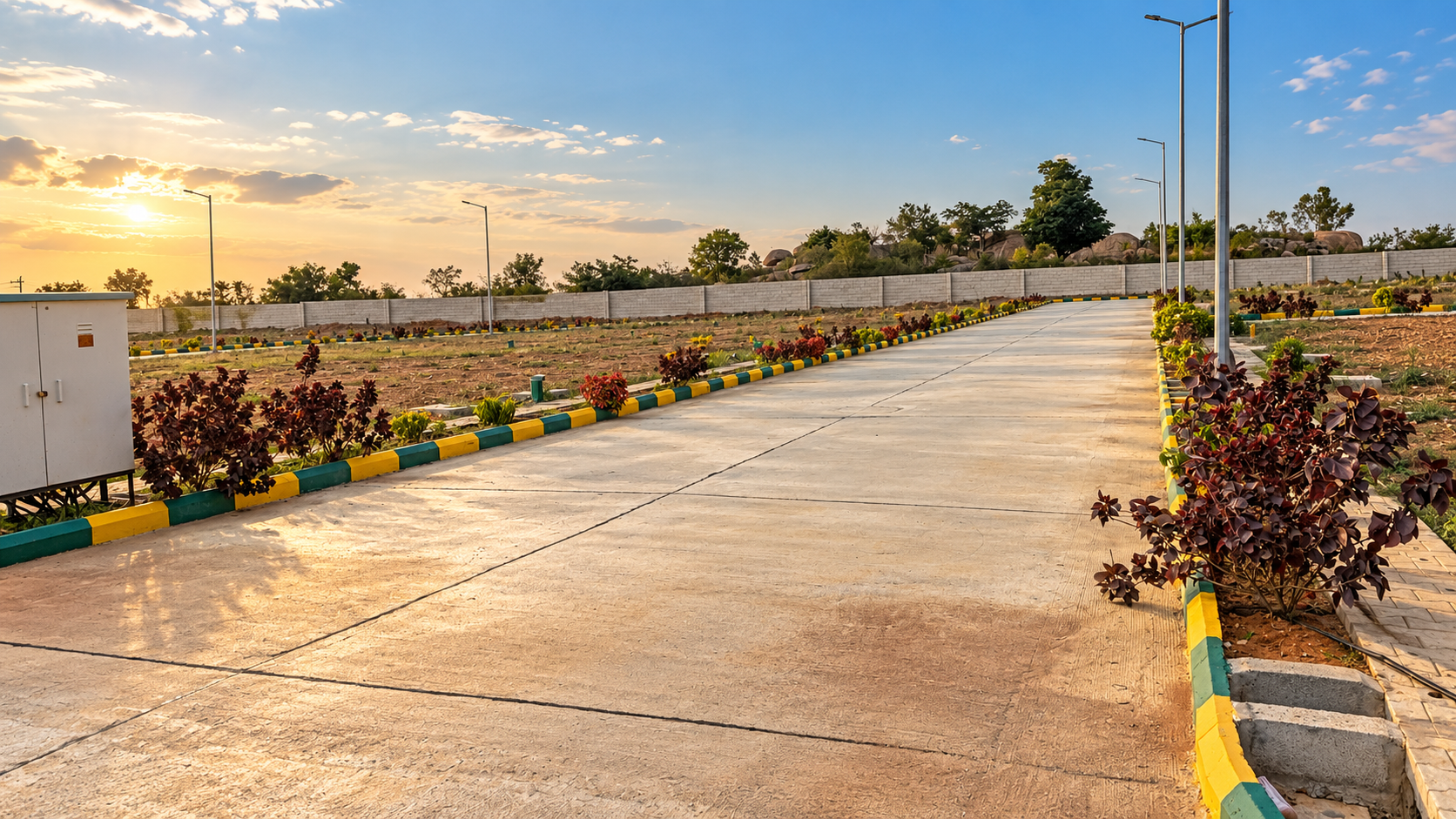
Understanding RERA for Plotted Developments in Karnataka
When the Real Estate (Regulation and Development) Act, 2016 (RERA) came into effect across India, the public narrative focused primarily on multi-story residential apartments, delayed construction handovers, and builder bankruptcies. However, one of the most transformative yet under-discussed aspects of the legislation is how it governs residential plotted layouts and land developments.
In Karnataka, where thousands of residential sites are developed annually outside municipal limits along emerging expressway corridors, understanding RERA rules for plot projects is critical for any land investor.
This objective guide provides a comprehensive overview of how Karnataka RERA (K-RERA) operates in the plotted development segment: statutory registration thresholds, key buyer safeguards, how RERA intersects with town planning approvals like DTCP, and how buyers can independently verify project records on the official government portal.
1. When is RERA Registration Mandatory for Plot Layouts?
Under Section 3 of the Real Estate (Regulation and Development) Act, 2016, residential plotted land developments must be registered with the Karnataka Real Estate Regulatory Authority (K-RERA) if they meet either of the following criteria:
1. Land Area Threshold: The total land area proposed to be developed into a plotted community exceeds 500 square meters (approximately 5,382 sq.ft). 2. Number of Plots Threshold: The total number of plots proposed to be carved out and sold exceeds 8 plots (inclusive of all phases).
If a plotted layout exceeds either 500 sq.m or 8 plots, the developer must secure a K-RERA registration certificate before: - Publishing marketing advertisements in print, digital, or billboard media. - Collecting booking advances or token tokens from prospective purchasers. - Issuing allotment letters or executing agreements of sale.
Exceptions to RERA Registration: Plotted developments are exempt from RERA registration under specific, narrow statutory conditions: - **Small-Scale Layouts:** Micro-subdivisions where the land is under 500 sq.m AND does not exceed 8 plots. - **Pre-RERA Completed Layouts:** Projects where all physical development infrastructure was 100% completed and formal Completion Certificates / Release Orders were issued by town planning authorities before the RERA Act became operational in May 2017. - **Renovation / Boundary Maintenance:** Simple maintenance of existing roads or compound walls where no new plots are carved out or advertised.
2. Planning Approval (DTCP / BDA) vs RERA Registration: Key Differences
A frequent point of confusion among land buyers is assuming that planning permission and RERA registration are the same. They serve entirely distinct legal functions:
- Town Planning Sanction (DTCP / BDA / BMRDA / BIAAPA): Governs physical planning and municipal standards. The planning body scrutinizes road widths (e.g. 30 ft, 40 ft, or 60 ft), civic amenity reservations, stormwater drainage networks, and residential conversion legality. Read our complete guide to [DTCP approval in Karnataka](/blog/dtcp-approval-explained/) to understand planning bylaws.
- RERA Registration (K-RERA): Governs consumer protection, promoter accountability, financial discipline, marketing disclosures, and development timelines.
The Sequential Relationship: A promoter cannot apply for RERA registration without first having an approved layout sanction from the competent town planning authority. RERA does not design or approve roads; it holds the developer legally accountable to deliver exactly what the town planning authority sanctioned.
3. Major Buyer Protections Under K-RERA for Plotted Projects
When a plotted layout is registered under K-RERA, buyers gain substantial statutory protections that never existed in the unregulated pre-RERA era:
1. The 70% Financial Escrow Mandate In the past, developers frequently collected advance money from plot buyers in Phase 1 and diverted those funds to acquire raw farmland elsewhere, leaving internal roads, electricity transformers, and drainage uncompleted for years. Under Section 4(2)(l)(D) of RERA, **70% of all buyer payments must be deposited in a designated bank escrow account**. Withdrawals are permissible solely to cover physical development costs and must be certified by an engineer, an architect, and a practicing chartered accountant in proportion to verified completion percentages.
2. Strict Adherence to Sanctioned Layout Plans Promoters cannot alter the dimensions of individual plots, eliminate advertised parks, or convert civic amenity spaces into saleable residential sites without obtaining the written consent of at least **two-thirds of the allottees** who have booked plots in the layout.
3. Five-Year Defect Liability Period Under Section 14(3) of RERA, the promoter remains legally responsible for any structural defect or infrastructural deficiency (such as collapsing road surfaces, failed underground drainage, or defective water pipes) brought to their notice within **5 years** from the date of handing over possession, and must rectify it within 30 days without charging plot owners.
4. Transparent Quarterly Progress Disclosures Registered promoters must upload quarterly progress updates (QPR) to the K-RERA web portal, detailing infrastructure progress, number of plots sold, pending litigations, and updated completion timelines.
4. How to Verify a Plotted Layout on the Karnataka RERA Portal
Buyers should never rely on verbal claims that a project is "applied for RERA" or "RERA exempt." You can independently verify any project in minutes:
1. Visit the Official Website: Navigate to the Karnataka RERA portal at [rera.karnataka.gov.in](https://rera.karnataka.gov.in). 2. Access Project Search: Go to the "Services" or "Project Status" menu and select "Approved Projects". 3. Search the Database: Search by the project name, developer entity name, or the alphanumeric RERA registration number (e.g., `PRM/KA/RERA/...`). 4. Inspect Key Public Disclosures: Download and review: - Approved layout drawing and sanctioned plot numbers. - Declared project completion deadline. - Title verification report and encumbrance certificate. - Bank details for the designated 70% escrow account. 5. Check for Warnings or Complaints: The portal also lists projects under investigation, applications rejected, or notices issued for unauthorized marketing.
5. Essential Questions to Ask Before Finalizing a Plot Purchase
When evaluating any plotted layout in Karnataka, ask the promoter for written verification on the following points:
1. Is this layout registered under K-RERA? If yes, request the exact registration certificate number and verify it on the state portal. 2. If the developer claims RERA exemption, what is the legal basis? Is the layout under 8 plots / 500 sq.m, or did it receive final release orders and completion certificates prior to May 2017? 3. Has the layout received statutory town planning sanctions? Ask for the DTCP, BDA, or BIAAPA sanction letter along with the approved blueprint. 4. Has DC Residential Conversion been certified? Review our complete [documents required to buy a plot in Bangalore](/blog/documents-required-to-buy-plot-bangalore/) checklist before releasing advance token payments. 5. What is the registered Khata status? Ensure the property carries clear A-Khata or e-Swathu E-Khata documentation. Read our guide on [A-Khata vs B-Khata](/blog/a-khata-vs-b-khata-karnataka/) to understand the implications for bank loans.
Conclusion: Balancing Planning Sanctions and Regulatory Compliance
A safe land investment rests on two complementary pillars: statutory planning approval (such as DTCP sanction with DC conversion) guaranteeing physical and architectural infrastructure compliance, and regulatory transparency governing commercial delivery timelines.
Before committing funds, conduct thorough legal due diligence with a qualified property advocate and verify public records independently. Explore our catalog of [verified residential plot projects](/projects/) to experience how transparent planning, clear titles, and quality infrastructure come together.
Common Questions & Practical Answers
Yes. The Real Estate (Regulation and Development) Act, 2016 explicitly covers both building projects and residential plotted land developments in Karnataka. Any layout where the land area to be developed exceeds 500 square meters (approx. 5,382 sq.ft) or the number of plots to be developed exceeds 8 plots falls under mandatory K-RERA registration requirements prior to advertising or selling.
DTCP (Directorate of Town and Country Planning) is the statutory town planning authority that approves layout infrastructure blueprints (road widths, parks, zoning, and drainage compliance). RERA is the real estate market regulatory authority that governs commercial conduct, timeline disclosures, financial escrow discipline, and buyer protections. A plotted project must first obtain statutory planning approvals (such as DTCP or BDA) before applying for RERA registration.
No. Under Section 3 of the RERA Act, promoters are strictly prohibited from advertising, marketing, booking, selling, or inviting buyers to purchase plots in any real estate project requiring registration without first obtaining a valid RERA registration number from the Karnataka Real Estate Regulatory Authority.
RERA mandates that 70% of all funds collected from plot buyers must be deposited into a dedicated project escrow account in a scheduled bank. These funds can only be withdrawn in proportion to the certified percentage of physical infrastructure completed on site (certified by an engineer, architect, and chartered accountant), preventing developers from diverting money to purchase other land parcels.
Visit the official Karnataka RERA portal at rera.karnataka.gov.in. Navigate to the 'Project Status' or 'Approved Projects' tab, search by the promoter name, project name, or RERA registration number, and download approved layout blueprints, development milestone schedules, and legal title disclosures.
Recommended Opportunities & Locations
Avinya Enclave
DTCP approved villa plots from ₹3,299/sq.ft
Invest in Vemgal
45-50 mins (48 km via STRR) • Industrial Hub
Speak to Our Legal Advisor
Get free legal scrutiny support and DTCP guidance for your plot purchase.